
|
|
Learning good bedside manner as a professional in the health industry
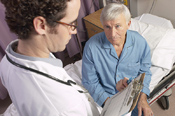
Today more than ever health professionals are realizing that a good bedside manner is more important than ever before.Healthcare employers are increasingly measuring patient satisfaction levels and rewarding their employees for providing high-quality customer service. Good bedside manners can not only improve interactions with patients, but also can advance health professionals' careers. There is strong evidence that suggests those health care professionals who have strong relationships with their patients are less likely to get sued, and may be more likely to move up the professional ranks.
Studies have also shown that physicians who communicate well are less likely to be sued for malpractice than poor communicators. There is significant evidence that shows a clear association between rapport with patients and an incidence of lawsuits. In addition, evidence also shows that in situations where intuitive physicians who have the ability to connect with patients go on to thrive in a group medical practice, while less-personable physicians flounder.
|
|
In addition, health professionals in hospital settings who effectively relate to patients and families are also rewarded. At hospitals across the country employees' performance appraisals include an evaluation of soft skills like respect, courtesy, listening and anticipating patients' needs. Many hospitals now offer skill-building opportunities for nurses and other employees on topics such as how to keep families best informed of their loved ones' conditions.
Recent years show a much stronger emphasis on the service aspect of the whole healthcare experience. Experts agree though that the best way for health workers to learn good bedside manners is by example.Leaders in any part of health care need to be good role models for what good bedside manner looks like. Employees should understand that they may not necessarily learn some of this in school, but it really makes a difference for patients and families.
Opinions of medical professionals and educators alike differ on whether bedside manner can be taught.Ultimately, most agree that bedside manner can be taught, to an extent, but it does depend on the priority the healthcare professional places on it.The bottom line seems to be if you can get someone to appreciate the importance of compassion and coming to an understanding of a patient, they will be able to develop bedside manner.It is important to realize that skills can be and should be taught in terms of ways to say things and ways to approach difficult topics.For example, physicians need to be constantly reminded to eliminate medical jargon and check to make sure patients understand what they are being told.
Most medical schools do have their medical students receive some formal training in bedside manner.To help facilitate the development of these skills during the first few years of medical school, students conduct practice physicals with volunteer patients or actors. The sessions are then videotaped or audiotaped, and students receive feedback on their approach to patients. In addition, medical students are encouraged to observe practicing clinicians in action. In fact to get an idea of how much patients value a pleasant personality in their physician, the Medical College of Ohio'sreceived its largest individual gift ever, $1.9 million, with the demand it be used to teach bedside manner.
The ultimate bottom line may be that health professionals with good bedside manners may be happier in their jobs.Medical professionals need to realize that they really have an ability to impact patients' and families' experiences with their organization.Medical professionals need to realize that sometimes they may feel they do not have the time to sit and have conversations, but they need to realize that they can do little things. Touching a child's hand, make eye contact or acknowledge a patient's emotions may only take 30 seconds but can make a huge difference in overall care.
Privacy Policy, Terms of Use